
By Derim “Mike” Vinca, Owner of A-1 Milwaukee Heating & Cooling · 17+ years in the trade · Updated October 2026 · More HVAC guides
A furnace that suddenly gets loud is telling you something. Most noises are wear and tear, a few are a safety problem, and the sound usually tells us which. Here is what the common ones mean. If yours is on the serious list, or you are not sure, call or text 414-595-5175.
If you smell gas, leave the house and call We Energies at 800-261-5325 or 911 from outside before you call anyone else. If a carbon monoxide alarm is sounding, get everyone outside and call 911.

A bang or boom when the burners light
This is usually delayed ignition: gas builds up for a moment before it lights. Dirty burners, a weak ignitor or a gas-pressure problem are the common causes. Over time those small explosions can crack the heat exchanger. Have it checked soon, and make sure your carbon monoxide alarms work.
Rumbling after the burners shut off
A rumble or roar after the flame should be out can mean gas is still burning, a burner problem or a gas-valve problem. Turn the furnace off and call.
Squealing or screeching
On most furnaces this is a blower motor or inducer motor bearing that is wearing out; on older furnaces it can be the blower belt. It will not get better on its own, and a seized motor means no heat, usually on the coldest night.
Clicking without lighting
A few clicks at startup are normal. Repeated clicking with no flame means the furnace is trying and failing to light: often a failed hot-surface ignitor or a dirty flame sensor. Our guide Furnace not turning on? covers what to check first.
Rattling or vibrating
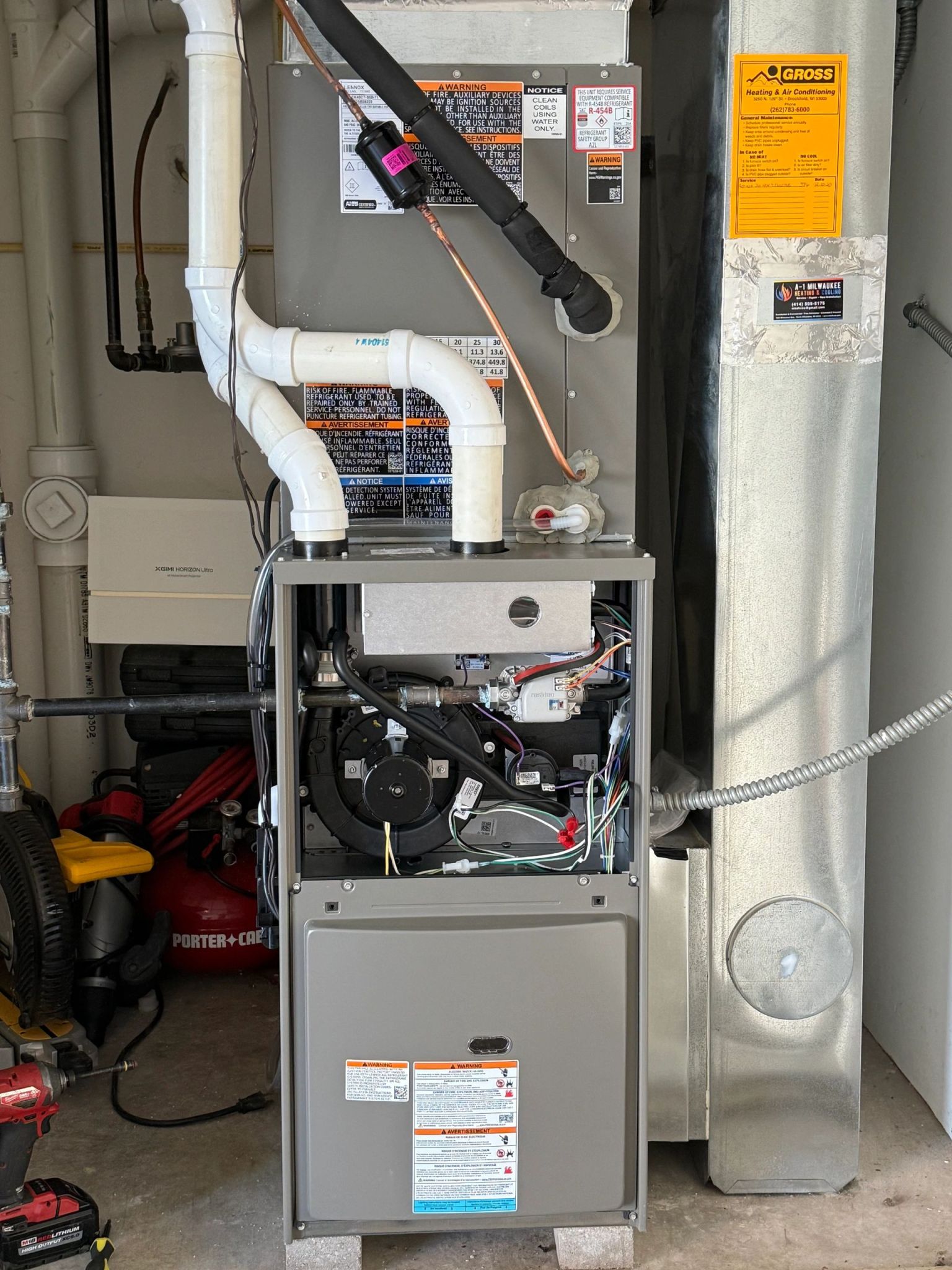
Start with the simple causes: the furnace door not seated, a loose panel or screw, or something resting against the cabinet. A rattle from inside, near the top, can be a failing inducer motor.
Humming or buzzing
A steady hum is normal. A loud buzz or a hum with nothing running can be a failing capacitor, transformer or blower motor. Leave the panels on and call.
Whistling, or pops in the ducts
Whistling is airflow being squeezed: a clogged filter, closed or blocked registers, or not enough return air. Pops and ticks in the ductwork as the furnace starts and stops are usually metal expanding and contracting; loud booms from the ducts can mean the system is fighting high static pressure. More on ductwork and airflow.
What to expect when you call A-1
We listen to it run, test the combustion, the gas pressure and the motors, show you the readings, and quote a flat-rate price before touching anything. Repairs are guaranteed for one year, parts and labor. More on our furnace repair and 24/7 emergency service.
Frequently asked questions
Is a noisy furnace dangerous?
Most noises are wear, not danger: a dry bearing, a loose panel, ducts expanding as they heat. The exceptions are a loud bang when the burners light and a rumble after they shut off; both can mean a combustion problem and should be checked soon, with working carbon monoxide alarms in the house.
Can I keep running it until you get here?
For squeals, rattles and duct pops, usually yes. For a bang at ignition, a rumble after shutdown, a burning smell that does not fade after the first run of the season, or any gas smell, turn it off and call.
Why did my furnace get louder after I changed the filter?
A very restrictive filter, like some high-MERV pleated filters, can make the blower work harder and whistle. Try the filter type the furnace was designed for, and make sure the filter door is closed.