
By Derim “Mike” Vinca, Owner of A-1 Milwaukee Heating & Cooling · 17+ years in the trade · Updated October 2026 · More HVAC guides
Water on the floor next to a furnace is common in Milwaukee basements, and most of the time the furnace itself is fine. Here is how to find the source and what to do about it. If you cannot find it, call or text 414-595-5175.
If water is near the furnace wiring or control board, turn the furnace off at its switch before you touch anything. If you smell gas, leave the house and call We Energies at 800-261-5325 or 911 from outside.

1. Is it a high-efficiency furnace?
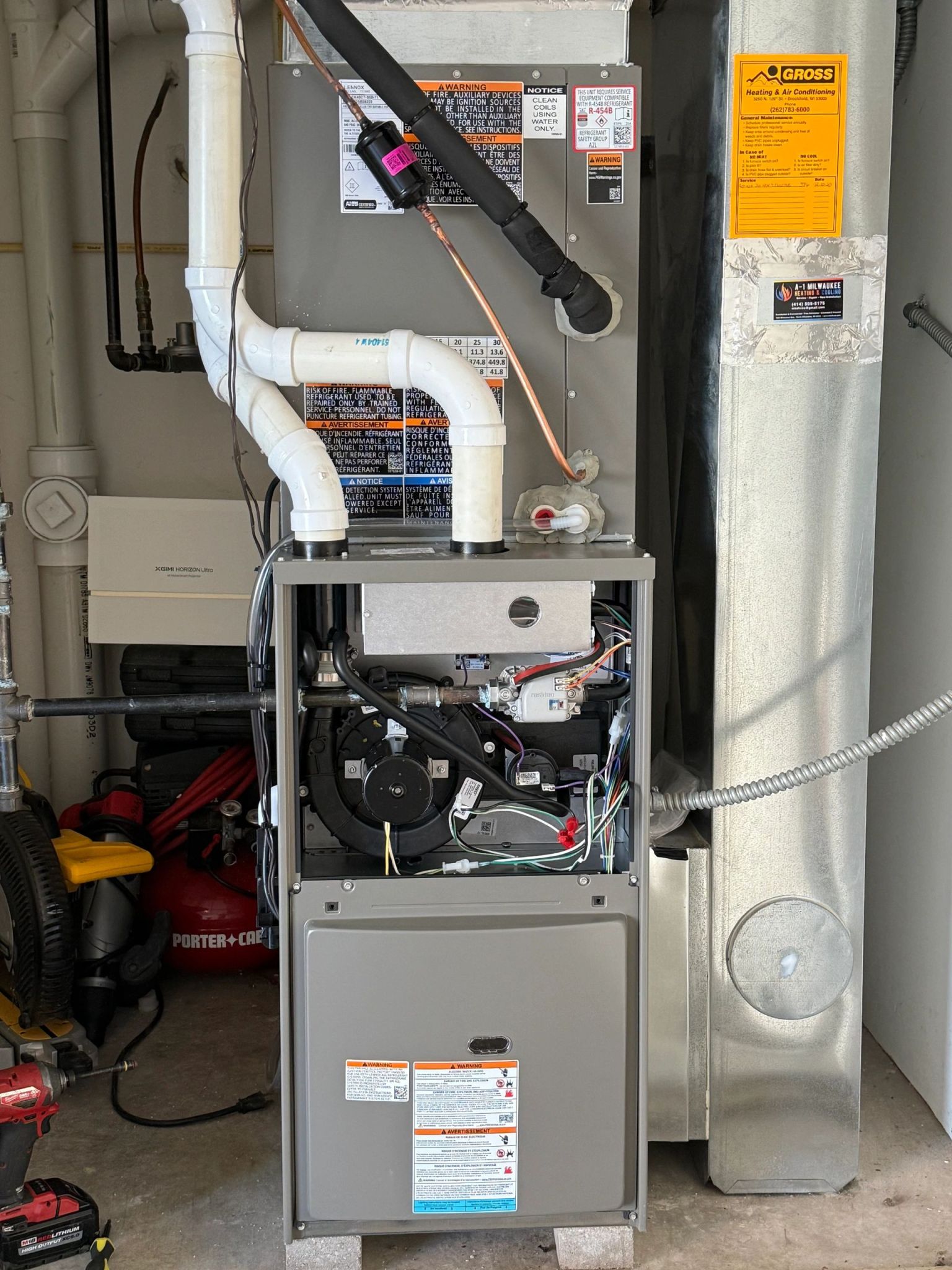
Furnaces that vent through white plastic pipes are 90% efficient or better. They pull so much heat out of the exhaust that water condenses inside them, gallons a day in cold weather, and that water has to drain away. Most furnace leaks come from this drain system. An older 80% furnace with a metal flue should not make water at all, so if it is wet, the water is coming from somewhere else; see 5, 6 and 7 below.
2. The drain line and trap
The water runs through a plastic trap and a small hose or pipe to a floor drain or a pump. Rust, sludge and algae clog it over time. Look for a kinked or disconnected hose and a trap full of gunk. When the drain backs up, many furnaces shut down on a safety switch, so a leak and a no-heat call often show up together.
3. The condensate pump
If there is no floor drain nearby, a small pump with a tank lifts the water to a sink or drain. If the tank is full and the pump is silent, check that it is plugged in. If it hums but does not empty, or the float is stuck, it needs cleaning or replacement. Many pumps have a safety switch wired to the furnace that shuts the heat off when the tank fills.
4. A frozen or blocked drain or vent
Drain lines that run through an unheated garage, crawl space or outside wall can freeze on the coldest nights, and the water backs up into the furnace. The plastic intake and exhaust pipes on the side of the house matter too: if snow or ice blocks them, the furnace shuts down. Keep snow cleared away from them all winter.
5. The humidifier
If a whole-home humidifier is mounted on the ductwork, a stuck water valve, a clogged drain or a worn water panel can leak down the side of the furnace. Close the small water line to the humidifier and see whether the leak stops. More on whole-home humidifiers.
6. The air conditioner coil
The AC coil that sits on top of the furnace makes water every time the air conditioner runs. A clogged coil drain or pan can overflow and run down the furnace cabinet. If you see the water mostly in summer, this is the likely source. Our guide AC not cooling? covers the drain.
7. Water at the vent of an older furnace
On an 80% furnace, water dripping from the metal vent pipe or the chimney connection can mean the exhaust is cooling and condensing before it leaves the house. That happens most in oversized, unlined chimneys, especially when a water heater was left venting alone after the furnace was replaced. It is a venting problem that can let exhaust back into the house: turn the furnace off, call us, and make sure your carbon monoxide alarms work. Our carbon monoxide alarm guide explains what to watch for.
What to expect when you call A-1
We find the source, clear and flush the drain, test the pump and the safety switches, and check the venting. If a part has failed, you get a flat-rate price before we replace it, and repairs are guaranteed for one year, parts and labor. More on our furnace repair and 24/7 emergency service.
Frequently asked questions
Is it normal for a furnace to make water?
A high-efficiency furnace makes water every time it runs, and all of it should go down the drain. A puddle is not normal. An older 80% furnace with a metal flue should make no water at all.
Can a clogged drain stop my furnace from heating?
Yes. Most high-efficiency furnaces have a pressure or float switch that shuts the burners off when water backs up, to protect the furnace. Clearing the drain often brings the heat back.
Should I turn the furnace off if it is leaking?
If water is near the wiring or the control board, yes, turn it off at its switch. A small drip from a loose drain hose can usually wait until we get there; put a pan or a towel under it.