
By Derim “Mike” Vinca, Owner of A-1 Milwaukee Heating & Cooling · 17+ years in the trade · Updated October 2026 · More HVAC guides
If a carbon monoxide alarm is sounding, get everyone, pets included, outside into fresh air and call 911 from outside. Do not go back in until the fire department says it is safe. If anyone has a headache, dizziness, nausea or confusion, tell the dispatcher.
Carbon monoxide is a gas you cannot see or smell. It forms when fuel burns without enough air, or when exhaust does not leave the house the way it should. In Milwaukee homes it usually comes from a furnace, boiler, water heater, stove or fireplace, or from a car or snowblower running in an attached garage. Once the fire department has cleared the house, the source still has to be found and fixed. Call or text 414-595-5175.

Alarm or chirp?
A carbon monoxide alarm sounds in groups of four beeps, repeated. That means CO. A single chirp about once a minute usually means a low battery or an alarm at the end of its life. Most alarms have a replace-by date on the back, often 7 to 10 years after they were made; check the label on yours.
What usually causes it
- A blocked, rusted or disconnected flue pipe or chimney, so exhaust spills into the basement
- A water heater left venting alone in an oversized chimney after the furnace was replaced with a high-efficiency model, so it no longer drafts properly
- Snow or ice around the plastic vent pipes on the side of the house; most furnaces shut down when those are blocked, but keep them clear
- Burners that are not burning cleanly, or a cracked heat exchanger
- A car, generator, snowblower or grill running in or near the house or an attached garage
What we check
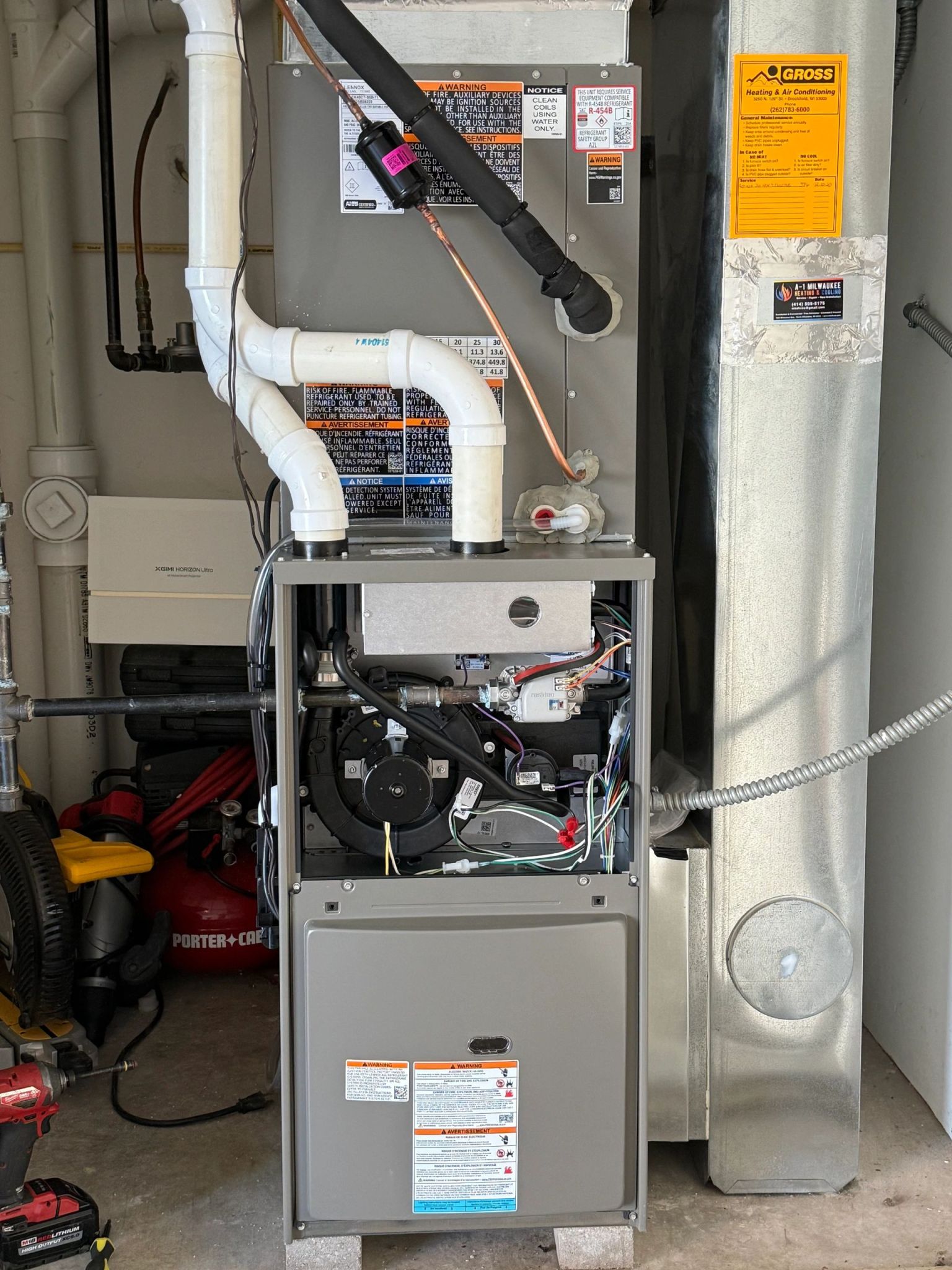
We measure carbon monoxide in the air and in the flue gas with a combustion analyzer, test the draft on the chimney and every vent, inspect the burners and the heat exchanger, and check how the furnace or boiler and the water heater vent together. You see the readings, and if something needs to be repaired or replaced, you get a flat-rate price before any work starts. Related: Furnace making noise? and Furnace leaking water?
Where carbon monoxide alarms go
Wisconsin law (2009 Wisconsin Act 158) requires carbon monoxide alarms in one- and two-family homes that have a fuel-burning appliance, a fireplace or an attached garage: one in the basement and one on each floor level, not counting the attic, garage or storage areas. Test them monthly, and replace them by the date on the label.
Get it checked before it alarms
A yearly tune-up is the best time to catch venting and combustion problems early. Our Comfort Club maintenance plan includes a yearly visit for each system, and our 24/7 emergency service line is answered 24/7.
Frequently asked questions
My CO alarm went off and then stopped. What should I do?
Treat it as real. Get everyone outside and call 911; firefighters carry meters and can check the house. Even if they find nothing, have the fuel-burning appliances and their venting checked, because carbon monoxide problems can come and go with the weather and with how hard the furnace is running.
Can a furnace make carbon monoxide even if it heats fine?
Yes. A furnace can heat normally while burning poorly or venting badly. That is why we measure instead of guessing, and why every home with gas appliances needs working carbon monoxide alarms.
How fast can you come after the fire department clears the house?
Calls ring Mike’s cell 24/7. If the fire department or We Energies shut off an appliance, we can usually come the same day to find the cause and get the heat back on safely.